

Spellbound Eve ✨
Notes on vulnerability, perfection and the search for validation

My debut poetry collection, Spellbound, comes out tomorrow! It’s being published by 5ever books and we’re having a launch party this Wednesday, 6pm at Unity Books Wellington 💗
✨Pre-order is now open, but if you’re in the city, we would love to see you in person! We’ll have fairy bread, balloons, and poetry 💗
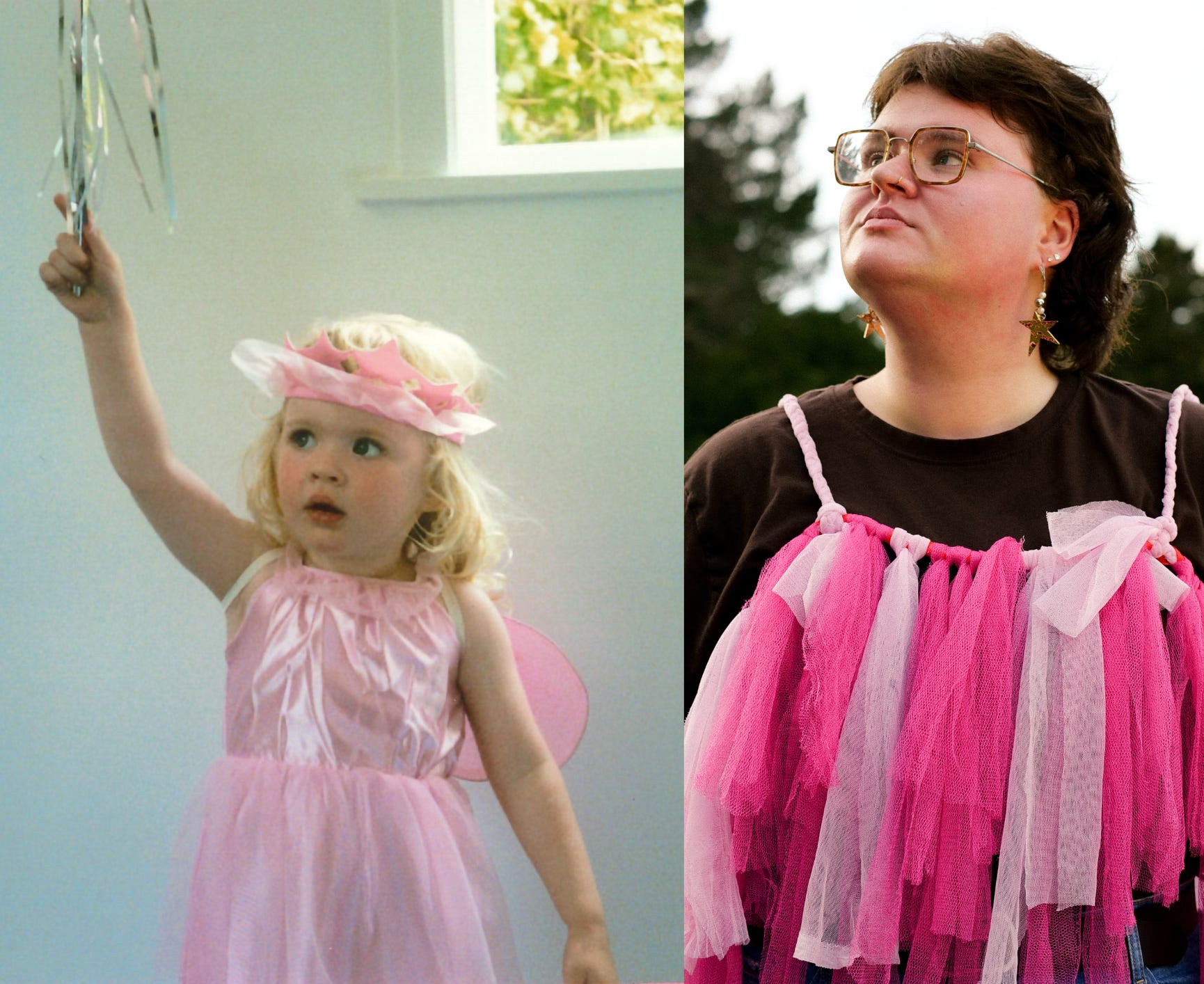
The poems in Spellbound are love letters to the difficulties of love. Full of conflict, confusion, and fear, but always a longing to connect.
I began with a question stuck in my head: what does living life believing you're not good enough for love do to a person? I was really focused on impact, the gory details of this immense feeling of shame. But through writing, it morphed into other, more complex questions: why do the same issues keep coming up in my relationships? What made me feel this way in the first place? How do I change my future? These deep, infiltrating questions are the seeds that grew this work into existence.
I started this project in 2022. I wanted 25 perfect poems for the first 25 years of my life. For this collection to be a still life portrait of who I’ve been and become. I wanted answers, a clean break, an uncomplicated letting go. But that is just not how life works. I am 27 now. I have a new name, a new job, a new haircut, more questions than answers, and most significantly, I have one less parent than I did when I started writing.
All of this perspective has seeped its way into the work. I will never be whoever I was before I lost my mother, so I allowed the project to change as I did. I was able to edit and rewrite to hold some of this fresh pain. It was always a story about me, but now it is more of a story about us. I wish we could have been closer, but this work touches on why we weren’t. I know a lot about the feelings of neglect, rejection, and longing she felt in her life. This undeniable link to her makes this book feel all the more delicate and precious.
In an old poem - Mother’s Day in May - I wrote:
Grief and love are my peanut and butter
Sticks to my teeth, the roof of my mouth
and my fingers too
Tastes bad and good at the same time
It’s not sweet enough for me but I’ll take it anyway
The experiences I’ve written about in this book mean one thing to me today, but may feel very different in the years to come. I am still being moulded in the clay of life. My understanding of the past is still unfolding, rippling, resonating. This collection is full of movement and uncertainty. It feels messy in the best way. Over time, I realised my job was not to try and capture a hardened, completed story, but instead to engage in this ongoing dance, stretch, and breath.
Right now, I am exhausted, sad, and nervous, but I am also so excited and so proud. I can’t wait for this book to be in people’s hands, hearts, and lives. I feel so lucky to love the thing I’ve created. Working on it has been such a gift and salvation the past few years. I so hope you enjoy it xxxxx
To write or not to write?
I used to make a lot of art about intense emotions and shared it with the world without much thought. I felt so many painful things in a very public way. It was a cry for help, love, recognition, and validation. A cry to be seen and witnessed. I didn’t get what I needed. This burnt me and left me exposed in an unhelpful way. I had such a strong need to express myself, but now I feel a pit in my stomach, and I get embarrassed when I think about the art I was creating. Being so open about how I felt was radical at the time, but it’s left me with a lot of shame. I’ve felt hesitant to make larger bodies of work since my early 20s. I want to be genuine in my art, but I don’t want it to hurt me. I don’t want to regret being candid. I don’t want to be made fun of.
While writing Spellbound, I worried that I was slipping back into overexposure. I worried that in writing what feels true to me, I was begging for attention again, cannibalizing my trauma for validation. But it has made me wonder why we have such a visceral negative reaction to art that is completely earnest. It’s the kind of art I crave to consume, but creating it myself feels like I’m breaking a rule. Like, I’m not being mysterious and aloof enough. That I’m showing I’m affected. That someone will say it’s cringe. The risk of honesty often feels too large; there are too many ways it could go wrong. Why would anyone even care to read about my struggles? Why put my own mess out in the world when so many other people are creating great work about trauma, loss, and heartbreak? What could I possibly have to contribute?
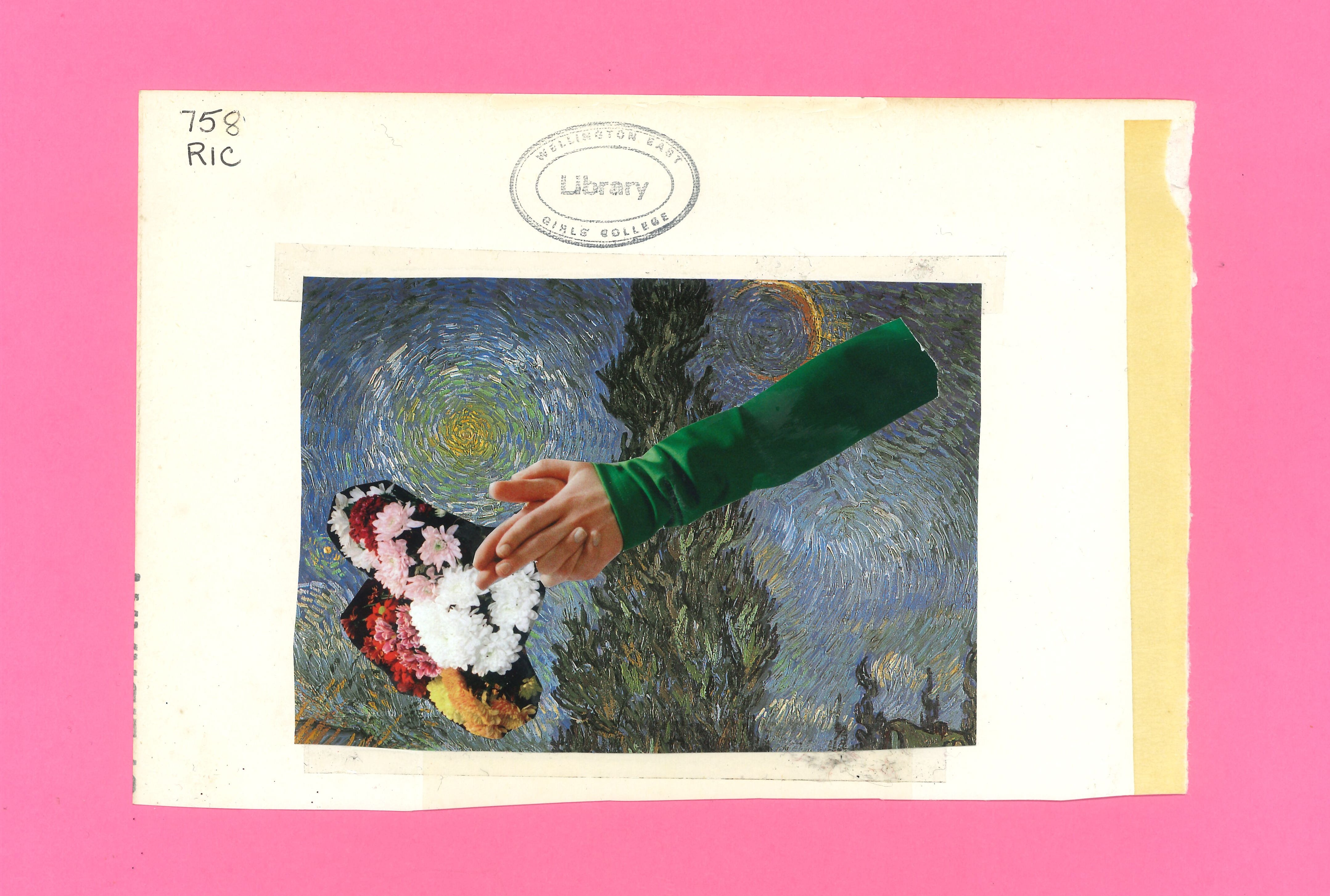
The answer I slowly settled on was that creating a shelf for these feelings I’ve hidden and pushed down is a gift to myself. This book is my proof, evidence, confirmation. It has been formative to practice not thinking about other people’s side of things and just holding my own. For once, I was able to honor what I’ve been through and what I want to say about it. Creating artworks for the collection, selecting parts of pop culture to reference, and even making writing playlists all let me find some space for myself. I let the work know I think it deserves the room, deserves to breathe, and even deserves to be seen. I did it for myself. Letting it see the light of day is an act of ownership, acknowledgment, and letting go.
I have so much more clarity around my experiences than I did when I was 21. I have more stability, confidence, and understanding in my life. I’ve processed a lot through creating this project - often taking breaks for months when working through the feelings I was trying to write about in real time. This work comes from someone more grounded than I was years ago, reading brutal, un-edited notes app poems in Wellington bars. I feel like creating work that is true to me is enough of a feat in itself. I don’t need intervention or crisis services or to be told I’ve done a good job. I’m able to give myself the validation I sought that was impossible to find on my own before now.
Margeaux Feldman / CARESCAPES wrote this incredible essay Writing From the Wound, which helped me a lot last year. They write about permitting yourself to create art even when you are not healed. Throughout my own process, I’ve felt like I don’t understand my life enough yet to be writing about it. If it’s still so hard to talk about, to live with, should I really publish a whole book about it? Feldman’s work made me consider that maybe that’s okay. Healing is an experience that takes place throughout a lifetime. We should be allowed space to explore our pain at every stage. Are you really not supposed to make art about pain until you’ve reached a 360 perspective full of peace and understanding? I don’t have that kind of time.
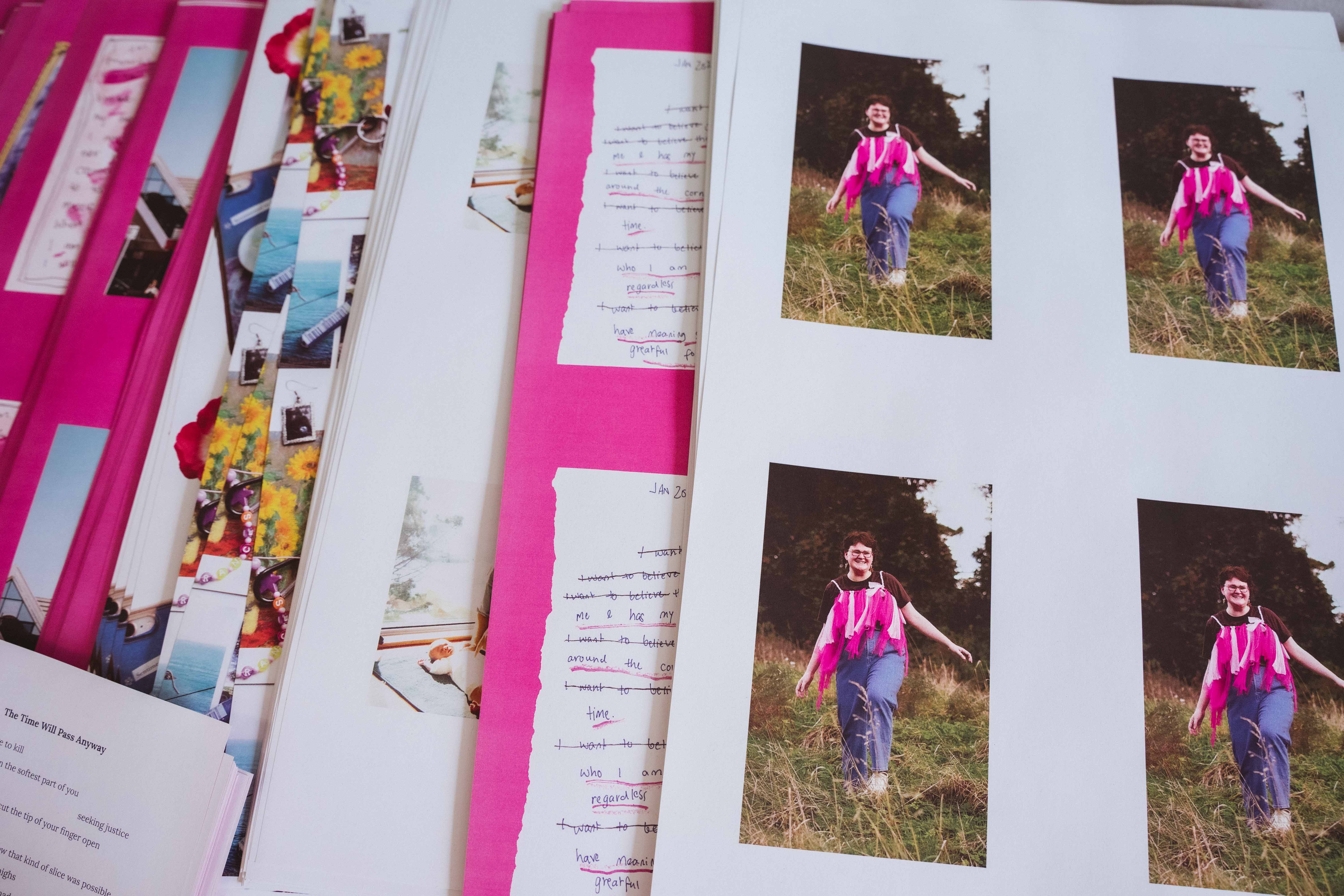
I think it’s quite beautiful to think of writing about our wounds as taking a photograph. We don’t expect photos to show anything but what’s already in the frame, so why should writing have such constraints? Spellbound has been described to me by others as raw, vulnerable, and exposing. While I know that’s true, I’ve also found it hard to wrap my head around it. For me, reading these poems feels like a comforting balm. I get to linger in all the things that I’m still trying to understand. I get to be with myself without hiding. I see myself as I am and as I have been.
“What if embracing all the things that happened to us along the way was normalised? What if we didn’t have to pretend that they don’t matter anymore, or pretend we’re over it and have moved on?” —Taffy Brodesser-Akner
These poems are acknowledgments and articulations of things I already feel in my body. Things I have always lived with. Things I am still learning about. I set out to create something true, lived in, and not afraid of its own imperfections. If we are to write what we know, these feelings of shame, grief, and rejection are what I know best. Putting them into the world is only holding a mirror to what is already here. In Letters to a Young Poet, Rainer Maria Rilke writes the following in response to “must I write?”
There is only one way: Go within. Search for the cause, find the impetus that bids you write. Put it to this test: Does it stretch out its roots in the deepest place of your heart? Can you avow that you would die if you were forbidden to write? Above all, in the most silent hour of your night, ask yourself this: Must I write? Dig deep into yourself for a true answer. And if it should ring its assent, if you can confidently meet this serious question with a simple, “I must,” then build your life upon it. It has become your necessity. Your life, in even the most mundane and least significant hour, must become a sign, a testimony to this urge.
The call to keep working on this project came to me again and again. I had to answer. I must.
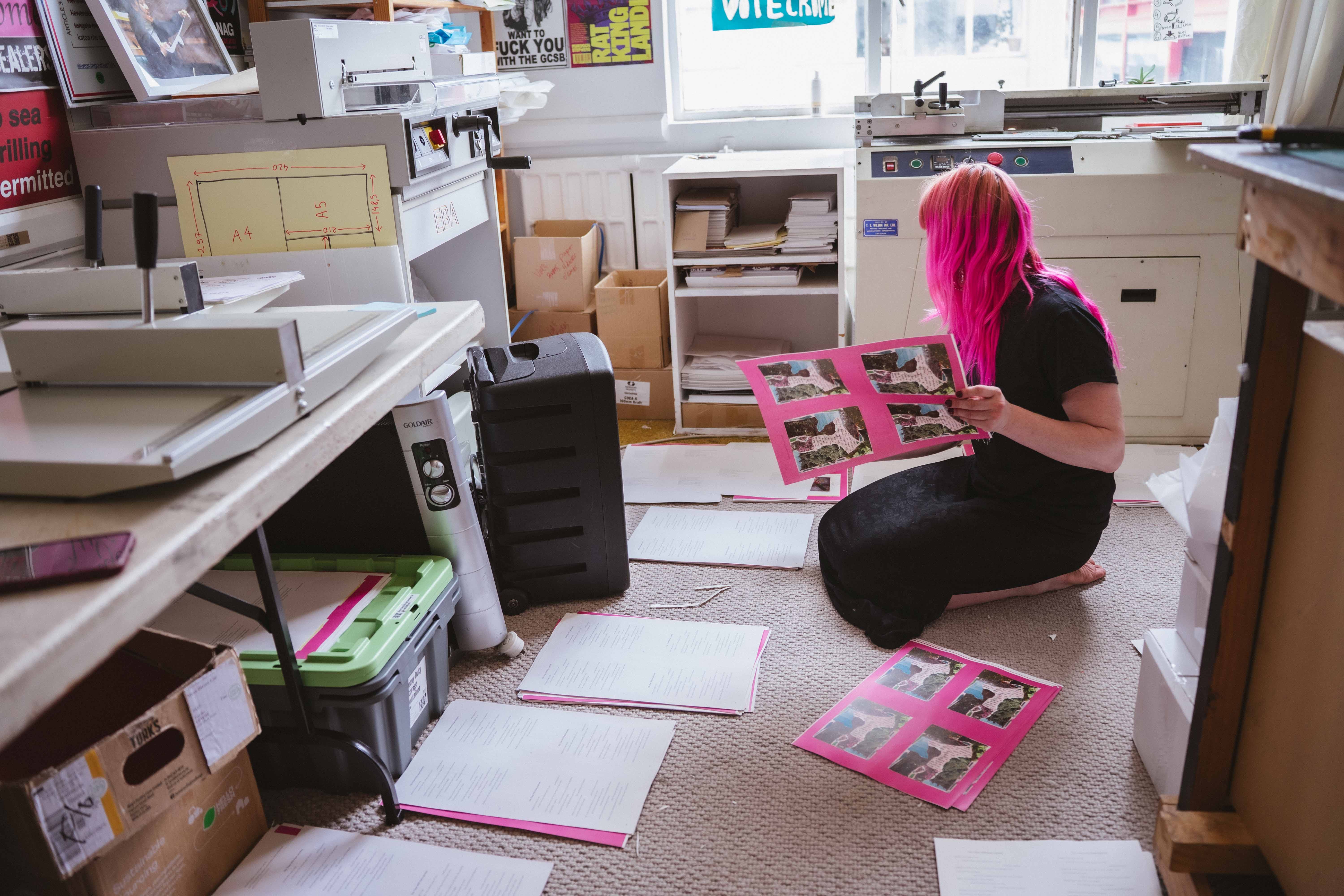
The other day, someone said that the book looked almost perfect. I told them that we weren’t aiming for perfect; we want it to be quality work that speaks for itself. Perfection feels so unattainable to me, it’s too much pressure. I don’t believe I could even create something perfect; it feels impossible to strive for. With the rise of AI and the amount of time we’re stuck on our phones, perfection becomes more unreal and uncanny every day. It’s inhuman.
What a gift it would be if we were able to drop all of our desires for perfection. And I’m not just talking about some of our desires for perfection—I mean all of them. The desire to look perfect; to have perfect grades/ outcomes/ performances; to be perceived as perfect by others; to have perfect answers to questions; to be the perfect mother/ father/ spouse/ sibling; to have the perfect circumstances; to live the perfect life… why?
Because every single one of these desires creates suffering. They create unattainable, unrealistic goals that lead to constant disappointment, self-judgement, and less acceptance of your self and others. And in this world—in this reality—there is no such thing as perfect.
-Brene Brown, The Gifts of Imperfection
I’m more interested in feeling and meaning, bringing people together to share in something. I want scraped knees, spelling errors, and a well of emotion. I want to feel connected. I feel lucky that people have let me know they’re excited to read this work. I’ve been able to bring other writers in to review and read it. I have so much gratitude to 5ever for being such a thriving hub for artists and activists. Preparing this book has been like tapping into a mycelium network that has always been here waiting for me.
I’ve always felt like artistically I sit somewhere between the scrappy floors of Zinefests and the institutional lit journals of New Zealand. Straddling both is a hard task; I lean scrappy, but sometimes still want traditional validation, but this middle zone feels most true to me. I think you can make high-quality art through serrated means. And you’ll probably be better off for it. As Marshall McLuhan said, the medium is the message.
In The Kronk Effect, artist CJ the X discusses the pull to create art out of fear, to feed the ego, and the pull to create out of love to make the world better. He encourages that both things can be true at once, but also asks artists to challenge their fear-based urges. “How much of your desire to create is rooted in your love for the craft, medium, and universe, and how much of it is based on insecurities, anxieties, and lack of self-esteem?” He says you need to acknowledge the fear to get to the love.
I’ve been grappling with these ideas for the past 3 years. It feels especially ripe given my writing is about not feeling good enough. I’ve tried to allow the pills of fear to challenge me. Tried to check in with myself when I’m getting fearful around my creative practice or when I feel myself becoming inauthentic. I often ask myself if I’m trying to reach a goal or take up an opportunity because I actually care about it and want it. Or is it because I think it would look cool to everyone else, that I’m worried another chance won’t come my way, or I’m afraid people will forget about me if I don’t do it? I have to remind myself to say no to what isn’t right for me. I try to turn my hunger to be known into creating work that is meaningful to me.
CJ goes on to conclude, “The success of others is not a threat to you because we are on the side of art…and when your time comes and you take centre stage, you won’t be taking anything away from anybody else. It won’t be because you sought it out, it will be because your centrality is conducive to the highest quality of the moment.”
I’ve been reminded again and again that only I can give my work worth; no prize, publication, or person can give me a gold star that fills the doubts inside of me. All I can do is choose to work hard, try my best, take my time, and give myself the praise I’m seeking. I give my work worth by believing I am worthy. It’s a constant battle but it’s one worth fighting. This book has given me so much, and now I get to give it to the world. It is an offering, a present, a hopeful wish. Once it’s in your hands, it’s not about me anymore, I will sigh with relief and let the wind catch me.
Notes x
✨ A poem from Spellbound was published last week in The Friday Poem via The Spinoff.
✨ Early in November, Amy Delahunty and I had a chat on In The Neighbourhood, covering all things love, Dirty Dancing, and the process behind the book.
✨I am returning to Wellington Access Radio on November 28th at 6 pm, where I’ll be talking with Emma Maguire, the host of Generation Gap, about the collection.
✨On November 30th, I’ll be reading in an incredible poetry lineup at Library Bar on Courtney Place. Details to come.
thanks for all the love xxx this is so crazy / so wonderful
see you on the other side <3
~ francis
huge congratulations + the last paragraph of this is a perfect tattoo idea for the insides of my eyelids <3
Regarding the topic of the article, the way those initial questions truely transformed into something deeper is profoundly insightful. Did that shift surprise you as you were writing?